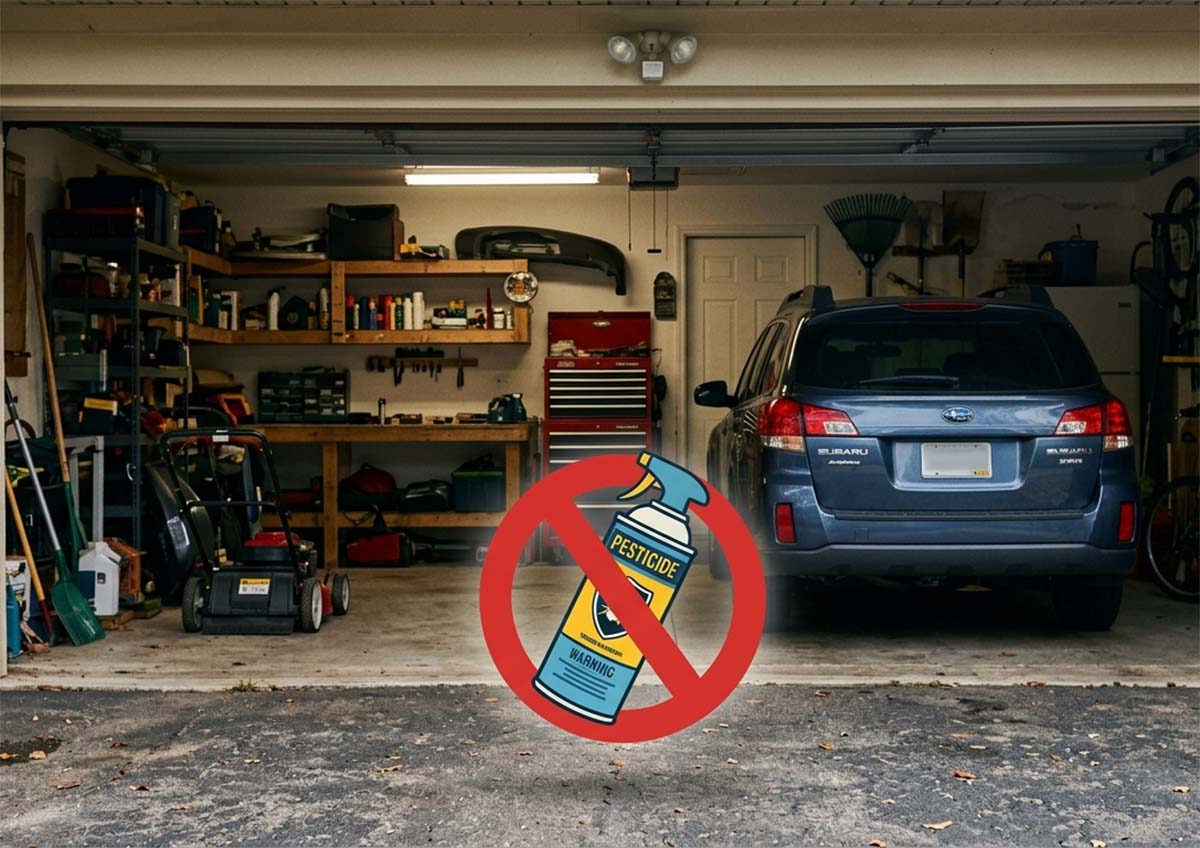
You open the shelter, see a spider or two, and reach for the nearest can of bug spray. It feels like the responsible move—kill the problem, close the lid, done. But treating a storm shelter like a kitchen counter you can fog and forget is one of the worst things you can do to it.
Underground shelters are small, enclosed, and largely sealed off from fresh air. That combination changes the rules. What works in an open garage or a backyard shed does not translate cleanly to a space your family may need to sit in for an hour or more during a tornado warning.
What Chemicals Actually Do to a Shelter
Pesticides and foggers are not designed with metal latches or painted steel in mind—they are designed to kill insects. The same active ingredients that do that job can also break down the materials that keep your shelter sealed and functional.
- Hardware corrodes faster. Residue left behind on hinges, bolts, and latches can accelerate rust, especially in a space that already deals with humidity swings.
- Residue builds up. With little airflow, chemical residue does not break down the way it would outdoors. It settles on surfaces and lingers.
None of that shows up the first time you spray. It shows up a year or two later, when a latch seizes or a lid doesn’t slide open smoothly—right around the time you need the shelter to work exactly as designed.
The Confined Space Problem
Even setting aside material damage, there is a more immediate issue: air quality. A storm shelter is a small, tight space with minimal ventilation. When you spray pesticide inside it, that residue and odor do not simply air out the way they would in a garage with the door open. The EPA notes that pesticide residue can affect indoor air quality well after application, especially in poorly ventilated spaces.
That residue is still there the next time the lid closes—possibly with your family inside for the duration of a warning. A shelter that smells like chemical fog is not a more comfortable place to wait out a storm. For kids, pets, or anyone with respiratory sensitivities, it can make an already stressful situation worse.
What to Do Instead
The fix is not a better chemical. It is keeping pests from getting in to begin with.
- Seal the entry points. Most pest problems in a shelter trace back to gaps around the lid, bolt holes, or the concrete crown—not a lack of chemical treatment.
- Control moisture, not just bugs. Pests are drawn to damp, dark spaces, and unchecked moisture invites mold and mildew right along with them. Reducing humidity does more to make a shelter inhospitable than any spray will.
A breathable, fitted shelter cover handles those two items without introducing anything harsh into the space. It blocks the gaps pests use to get in and allows enough airflow to keep humidity from building up—no residue, no corroded hardware, no fumes trapped with your family.
A storm shelter only does its job if it is ready to use without hesitation. That means keeping it clear of pests, but it also means not trading one problem for another in the process.