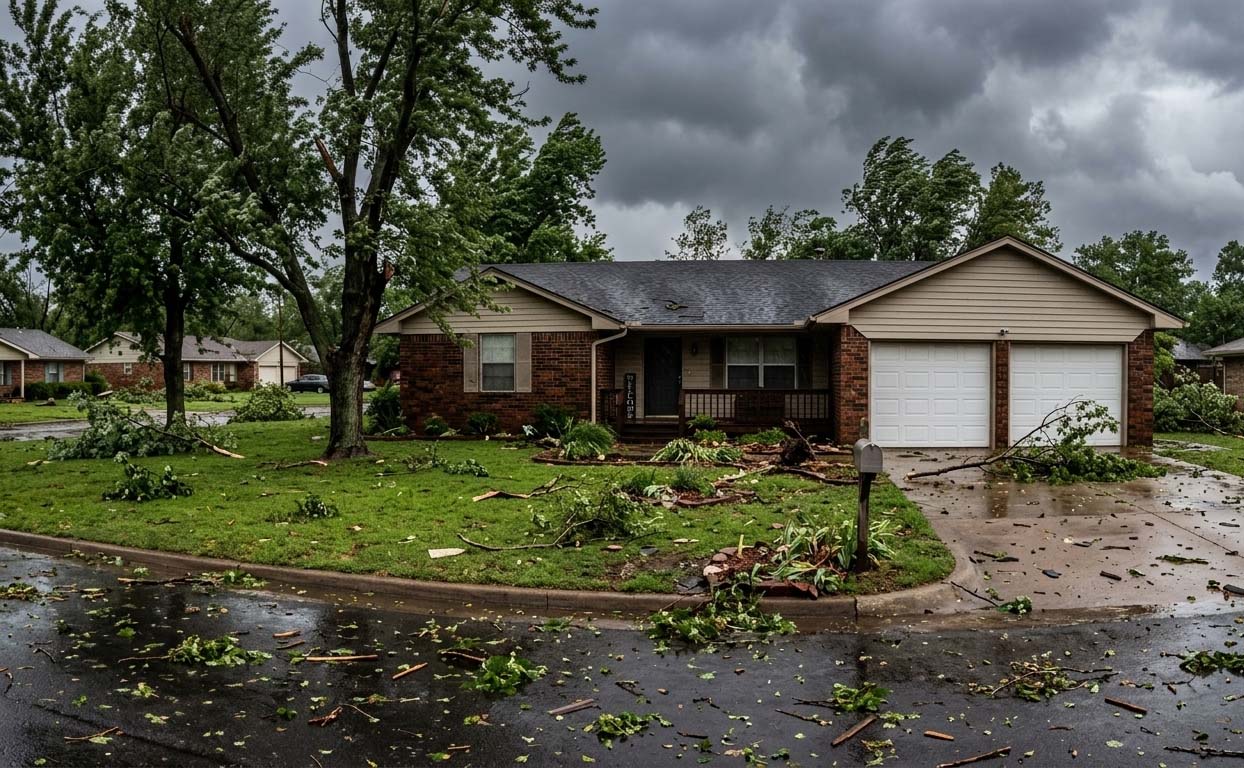
For most Oklahoma homeowners, tornado season ends somewhere around early June. The sirens go quiet, the weather apps get checked less obsessively, and the storm shelter gets forgotten again until March. But the shelter didn’t stop accumulating damage when the last warning expired. It spent the entire spring cycling through pressure events, humidity spikes, temperature swings, and debris deposits—and now it’s sitting in peak Oklahoma summer heat, quietly working through the consequences.
July is the right time to look. Not because you’re preparing for something coming, but because you’re assessing what already happened—and because a secondary tornado season window runs August through October, which means the window to fix things hasn’t closed.
What a Full Oklahoma Storm Season Actually Does
From March through June, an Oklahoma in-garage shelter doesn’t sit still. Each significant storm event brings its own load of physical stress and environmental exposure. By the time peak season ends, most shelters have experienced the following—whether the owner noticed or not.
Repeated pressure cycling. Every severe thunderstorm that passes over or near a home creates rapid barometric pressure changes. For an underground shelter with ventilation points, these pressure fluctuations push and pull air—and the moisture, dust, and microscopic debris carried in that air—through the vent openings with each pass. Over a full storm season of dozens of events, the cumulative particulate load inside a shelter adds up significantly.
Peak humidity exposure. Oklahoma spring is the most humid period of the year in most of the state. The combination of warm Gulf moisture pushing north, frequent rainfall, and the natural temperature differential between underground concrete and ambient air means that condensation events—where the shelter surfaces drop below the dew point and moisture forms directly on metal and concrete—happen most frequently during exactly this window. Every condensation cycle is a rust cycle and a mold-condition cycle running simultaneously.
Red clay and pollen accumulation. Spring storm winds carry Oklahoma’s characteristic red clay dust, tree pollen, and organic debris. The concrete crown around the hatch acts as a collection surface. In a typical season, the crown area of an uncovered or poorly protected shelter accumulates a visible layer of this material—and unlike loose dust, red clay packs and holds moisture against whatever surface it settles on. By June, what started as a light coating can become a compacted layer that stays wet long after the last rain.
The July Inspection: What to Look For Right Now
This isn’t the same as a pre-season checklist. Pre-season inspection looks for readiness. Post-season inspection looks for damage that accumulated during use. The distinction matters because you’re looking for different things in different places.
The crown area. Get down and look at the concrete perimeter around the hatch. Is there a packed layer of red clay, organic debris, or visible biological growth? Is any of that material in contact with the metal lid frame or hinge points? This is the highest-priority item for a July inspection because summer heat will bake whatever moisture is in that layer directly against any metal it touches, accelerating corrosion through the hottest months of the year.
The hatch inspection. Open the hatch and operate it several times. Does it slide open smoothly with the same force as before the season? Any grinding, stiffening, or resistance is a sign that debris is present, or there is corrosion and wear that has developed during the season.
The underside of the lid. This is the most commonly overlooked surface. Flip your inspection light under the lid and look at the inside face—especially near the edges and any points where the coating may have been nicked during use. This surface faces the warm, humid interior of the shelter and has likely experienced more condensation cycles than the exterior. Surface rust here progresses fast in summer heat.
The interior smell and air quality. After a full season of use and humidity exposure, the interior environment tells a story. A clean, neutral smell means the ventilation has been working and moisture hasn’t established itself. A musty smell means organic material has found the moisture conditions it needs. A metallic or chemical smell can indicate active corrosion or degrading coatings. Any of these findings has a specific response—and catching them in July rather than October means you have time to address them before the fall window opens.
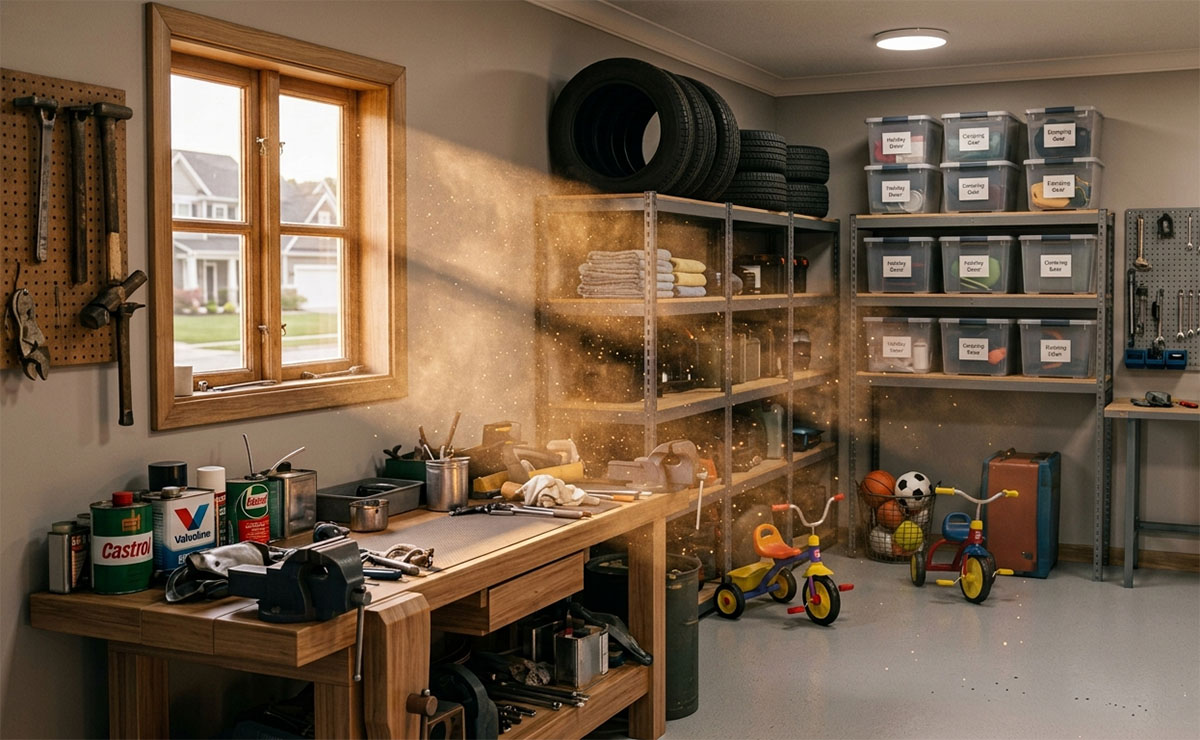
The approach path. Summer is when garage clutter tends to migrate toward available floor space. Check that the path from your interior door to the hatch is still the clear runway it should be. A drill the family ran in April may not reflect the current garage layout in July.
Why July Isn’t Too Late: The Fall Window
Oklahoma’s secondary tornado season runs roughly August through October, with September and October carrying real risk in most years. The fall pattern is driven by different atmospheric dynamics than spring—colder air masses from the north colliding with residual Gulf moisture—but the outcomes for unprepared shelters are the same.
A July inspection and any needed repairs gives you the full summer to address issues without time pressure. A breathable cover installed in July protects the shelter through the hottest months—when garage temperatures and direct sun exposure on the crown area are at their worst—and arrives at fall season doing its job.
There is no good reason to wait until September to find out what March through June did to your shelter.
The One Change That Protects Both Seasons
Most of what a full Oklahoma storm season does to an unprotected shelter comes down to one underlying condition: sustained contact between moisture-holding material—clay dust, pollen, organic debris—and unprotected metal surfaces. The solution to that condition is the same whether you’re looking backward at what spring did or forward at what fall will bring.
A breathable shelter cover keeps that material off the crown and lid surfaces while allowing vapor to pass through rather than trapping it. It’s not a pre-season item or a post-season item—it’s a year-round system that makes both the spring and fall inspection less eventful, because there’s less accumulated damage to find. If you’re doing your July inspection and finding a season’s worth of clay, debris, and early rust, the cover is the change that means you won’t find the same thing next July.
A Simple July Action List
- Clear and inspect the crown area—remove debris, assess for packed clay, check for any metal-to-debris contact points.
- Operate the hatch fully—note any resistance, stiffness, or hardware that feels different than it did before the season.
- Inspect the underside of the lid and the hinge points for surface rust.
- Smell-test the interior—neutral is good, musty or metallic means action.
- Clear and re-mark the approach runway in your current garage layout.
- If you don’t have a breathable cover in place, this is the right time—you’ll protect the shelter through summer heat and arrive at fall season with the system running.
The season is over. The shelter isn’t finished being used. Take twenty minutes in July and know what you’re working with before the next window opens.