
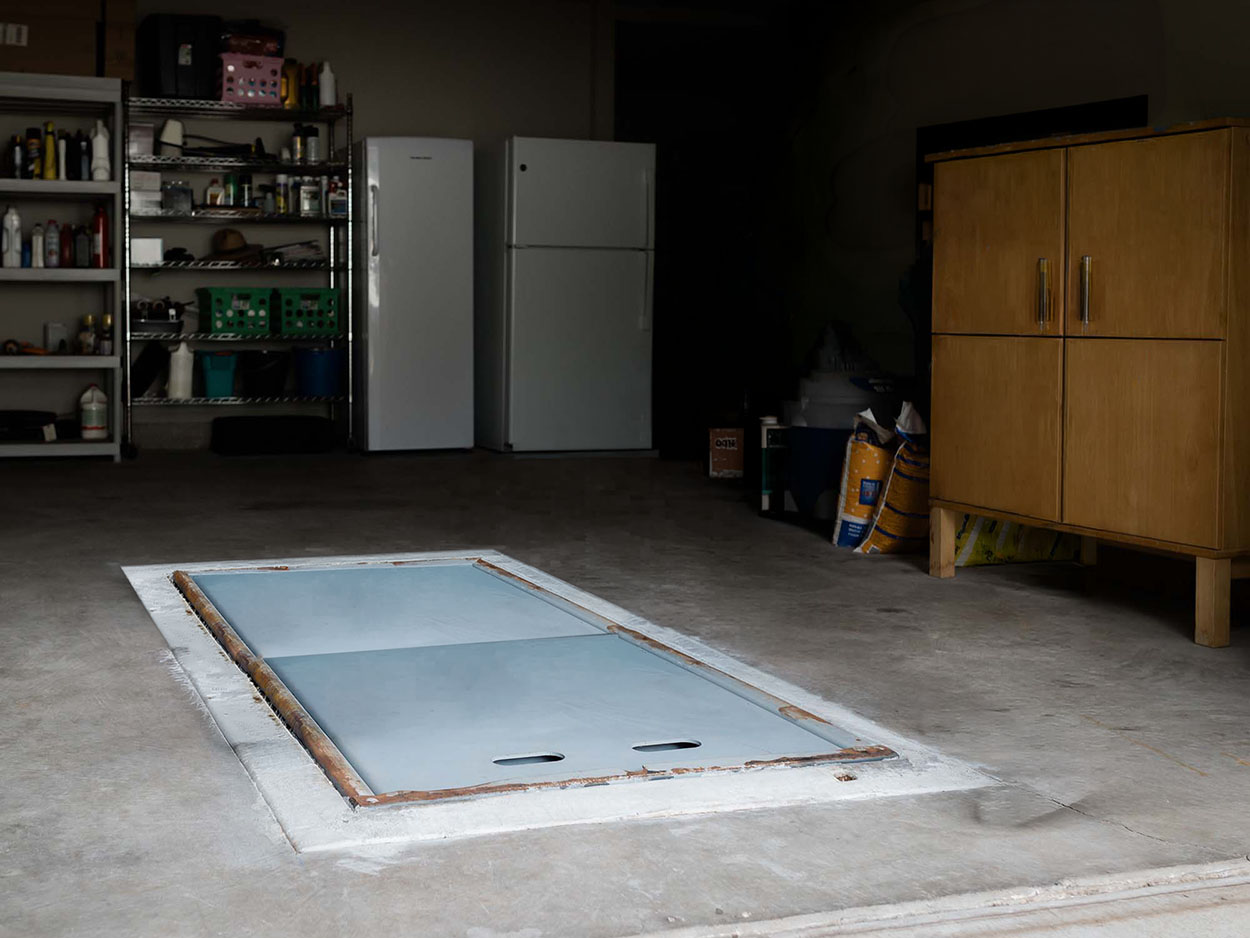
Your tornado shelter was one of the smartest investments you’ve made for your family. You know that.
But the price tag on the shelter itself was just the beginning.
For most homeowners, the real cost of a storm shelter isn’t the upfront purchase—it’s the ongoing maintenance that piles up quietly over months and years. Cleaning supplies. Rust treatment. The occasional mold remediation. The weekend afternoons spent on upkeep. The stress of wondering what’s down there when the sirens start.
None of these costs show up on the original invoice. But they’re real, and they add up.
Here’s what storm shelter ownership actually costs—and how to dramatically reduce it.
The Cleaning Problem: More Often Than You’d Think
An uncovered storm shelter in a garage is essentially an open pit in your floor. Every time someone parks, every time the garage door opens, every time a storm passes through—dirt, dust, debris, and insects find their way in.
Most shelter owners end up cleaning out their shelter four to six times a year just to keep it in a usable state. That means hauling out a shop vac, wiping down walls, sweeping out grit, and checking for critters. Even if each session only takes an hour, that’s a full workday per year spent on a problem that’s entirely preventable.
And “cleaning” is the optimistic version of events.
Mold Remediation: The Cost You Really Don’t Want
In-ground shelters are susceptible to humidity. When warm surface air meets the cooler underground environment, condensation forms on the walls, the floor, and the underside of the lid. Over time, that moisture creates the conditions mold and mildew need to thrive.
Mild mold problems can often be handled with a scrub brush and a bleach solution—more time and effort, but manageable. Moderate infestations may require antifungal treatments and multiple cleaning sessions. Severe cases can involve professional remediation.
Mold remediation for a confined space typically runs between $500 and $1,500 depending on severity and who you hire. Even if you handle it yourself, the chemical cost, protective gear, and time investment can easily reach several hundred dollars.
Prevention is far cheaper than treatment. But prevention starts with controlling moisture—and moisture control starts at the opening.
Rust: The Slow Drain on Your Shelter’s Lifespan
Moisture doesn’t just feed mold. It attacks metal.
Storm shelter lids and hinges are typically steel. Left in a humid environment without protection, steel oxidizes—and once rust gets a foothold, it spreads. Surface rust is cosmetic; deep rust compromises structural integrity and eventually affects the function of the hatch itself.
Routine rust prevention involves wire brushing, applying rust-inhibiting primer, and periodic repainting. Depending on how far corrosion has progressed, a single rust treatment job can take a full afternoon and $50–$150 in materials. Replacement hardware—hinges, latches, handles—adds more.
Over a ten-year period, rust management on an uncovered, humidity-exposed shelter can easily cost $300–$600 in materials alone, not counting labor.
The Time Cost No One Calculates
There’s a version of this conversation that only talks about dollars—and that version undersells the problem.
Time is the cost that never shows up in a spreadsheet but never stops being spent.
Thirty minutes here to sweep out debris. An hour there to treat a rust spot before it spreads. A Saturday afternoon dealing with a mold situation that got out of hand. Checking the shelter before storm season. Checking it again after a big storm. Wondering, in the back of your mind, whether you checked it recently enough.
The average American values their leisure time at around $15–$25 per hour. If a storm shelter without a cover requires even 15 hours of maintenance attention per year, that’s $225–$375 in real economic cost—every year, indefinitely.
A good cover eliminates the majority of that
The Emotional Cost: Hesitation When It Matters Most
Here’s the maintenance cost that’s hardest to put a number on.
When sirens go off, your family shouldn’t have to think twice about going into the shelter. But for families whose shelters are neglected—dirty, musty, potentially infested—hesitation is real and documented. People pause. They consider their options. In the worst cases, they make decisions during emergencies that they wouldn’t make if their shelter were clean and inviting.
The psychological friction created by an uninviting shelter isn’t just inconvenient. It’s a safety liability.
There’s also the low-level, background stress of knowing you’re behind on shelter maintenance. It’s easy to push it off. It’s not so easy to stop thinking about it.
A shelter you trust—because you know it’s clean, dry, and ready—removes that friction entirely.
How Preventing Debris and Moisture Changes the Math
The TakeCover Storm Shelter Cover was designed to address the root cause of nearly all the costs above.
By creating a breathable but protective barrier over the shelter opening, it keeps out:
- Insects and pests — so you’re not discovering an infestation when you need to act quickly
- Dirt and debris — so your shelter stays clean between uses without routine intervention
- Excess moisture — so the conditions that feed rust and mold never get established in the first place
Unlike sealed vinyl covers that trap humidity inside the shelter, Take Cover’s breathable mesh design allows airflow while blocking the debris and pests that cause the most damage. It’s the difference between managing a problem and not having the problem.
The Real Cost Comparison
Let’s run the numbers conservatively over five years for an uncovered shelter:
| Cost Category | Estimated 5-Year Total |
|---|---|
| Routine cleaning (materials + time) | $300–$500 |
| Rust prevention and treatment | $150–$300 |
| Mold treatment (at least one incident) | $200–$600 |
| Time cost at $15/hr, 10 hrs/year | $750 |
| Total | $1,400–$2,150 |
A TakeCover Storm Shelter Cover costs around $249.
That’s not an expense. That’s cost avoidance.
The Shelter You Actually Use Is the One That Protects You
Storm shelters only work if your family goes in them. Families go in them when they trust them. Families trust them when they’re clean, dry, and ready.
The Take Cover Storm Shelter Cover doesn’t just protect your shelter from the elements. It protects your investment, your time, and the peace of mind that the whole thing was supposed to provide in the first place.

